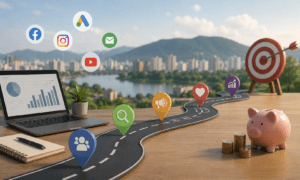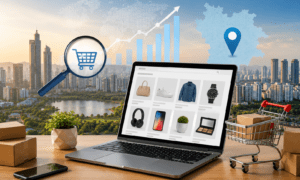
In a period overwhelmed by innovation, organisations are constrained to embrace creative techniques to flourish in the advanced digital landscape. Digital marketing has arisen as a foundation for progress, offering plenty of roads to interface with the main interest group and drive business development. Understanding the different types of digital marketing helps businesses choose the right strategies to improve visibility, generate leads, and build customer relationships.
Page Content
ToggleMore than 35% of B2B marketers surveyed have established a lead-nurturing strategy. We should dig into the assorted domains of Digital marketing strategies and social media marketing, investigating the heap types that organisations use to remain ahead in the competitive online market.
What is Digital Marketing?
Digital marketing is the process of promoting products or services through online channels such as search engines, social media platforms, websites, email, and mobile applications. It helps businesses connect with their target audience, increase brand visibility, generate leads, and drive sales using data-driven and measurable marketing strategies.
Difference Between Traditional Marketing and Digital Marketing
|
Factor |
Traditional Marketing |
Digital Marketing |
|
Channels |
Print, TV, and radio |
Digital marketing services spanning PPC advertising, content marketing, and influencer marketing |
|
Targeting |
Broad, general audiences |
Precise demographic and behavioural targeting |
|
Measurement |
Difficult to track |
Every click, conversion, and sign-up is measurable in real time |
|
Flexibility |
Fixed once published |
Campaigns adjusted instantly based on performance data |
|
Primary Goal |
General brand awareness |
Measurable actions (purchases, leads, conversions) |
|
Cost |
Expensive with uncertain ROI |
Scalable budgets with clear, trackable ROI |
|
Best For |
Mass market reach |
ROI-focused businesses of any size |
Top 7 Types of Digital Marketing
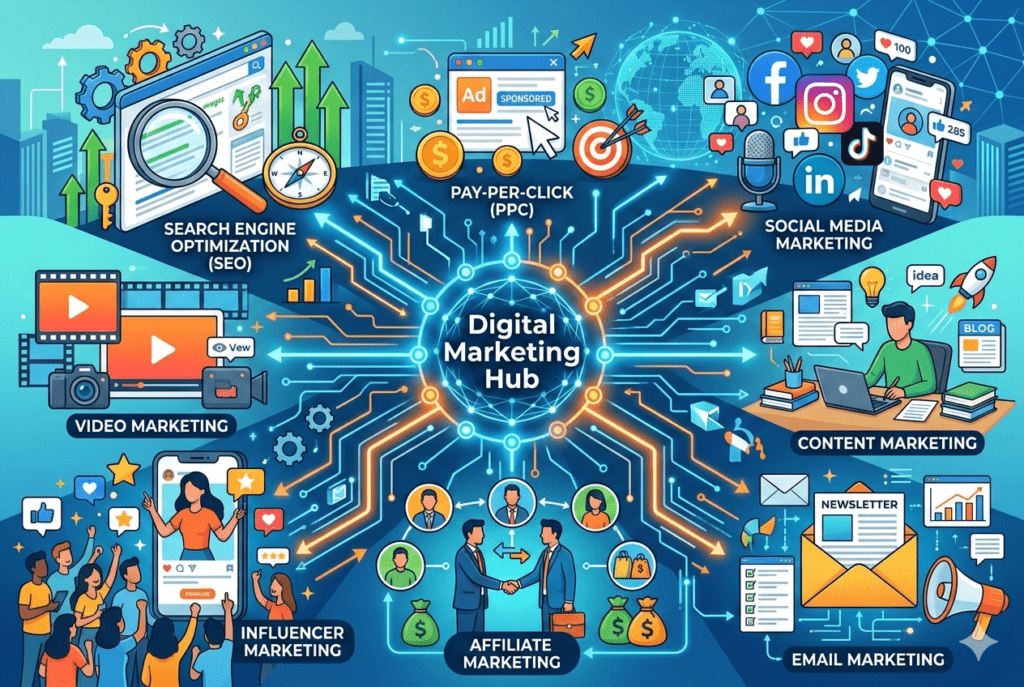
Understanding the different types of digital marketing helps businesses choose the right strategies to improve online visibility, build customer relationships, and generate consistent growth. From SEO and content marketing to social media and influencer collaborations, these types of digital marketing work together to strengthen brand presence, increase engagement, and drive long-term business success in the digital landscape.
1. Search Engine Optimisation (SEO): Enhancing Visibility
Search Engine Optimisation, or SEO, is the bedrock of advanced video content promotion. It includes streamlining a site’s content and structure to rank higher on web search results pages. By decisively consolidating watchwords, further developing site speed, and improving potential customer experience, organisations can expect from SEO Services in Thane, Mumbai, India, to expand their target audience, driving more traffic to their sites via a proper content strategy.
2. Content Marketing: Crafting Compelling Narratives
Content marketing and search engine marketing are key components that centre around making and circulating significant, important content to draw in and connect with a target audience. This incorporates blog entries, articles, recordings, and infographics. The objective is to lay out power, construct trust, and eventually drive productive potential customer activity via traditional marketing channels. Fruitful digital marketing includes attracting internet users and adjusting content on online platforms to the interests and needs of the target audience.
Also Read: Effective Content Marketing Strategies to Grow Your Business
3. Social Media Marketing: Building Connections
Social media platforms have become centres for correspondence and local area building. Online entertainment advertising includes utilising these stages to interface with the crowd, promote items or services, and cultivate brand loyalty. Whether through natural posts or paid advertising, organisations use stages like Facebook, Instagram, Twitter, and LinkedIn to draw in their objective audience.
Also Read: Benefits of Social Media Marketing
4. Email Marketing: Direct Communication Channels
Regardless of the ascent of different Digital marketing channels, email marketing remains a powerful tool. It includes sending designated messages to a gathering of people to sustain leads, advance items, or offer important information. 95% of companies using marketing automation are taking advantage of email marketing. Email marketing efforts can be customised, permitting organisations to fit their messages to specific segments of their audience.
Also Read: Top 6 Useful Metrics of Email Marketing
5. Pay-Per-Click (PPC) Advertising: Targeted Visibility
Potential customers pay an expense for each time their promotion is clicked in click-through rate adverts. This technique permits organisations to purchase visits to their site instead of procuring them naturally. Google Promotions is a well-known platform for a wide range of PPC Services advertising, empowering organisations to offer keywords and show mobile advertising conspicuously in web search tool organic search results.
Also Read: Top Benefits of Pay Per Click (PPC) Google Ads | From Clicks to Conversion
6. Affiliate Marketing: Collaborative Growth
In affiliate marketing, organisations work together with outside partners) who promote their products or services with the help of valuable content and through social channels. Partners procure a commission for every deal or lead created through their promotional endeavours. By working together, businesses can reach more people and use affiliates’ networks to increase sales through social platforms.
7. Influencer Marketing: Leveraging Digital Personalities for Impact
In the time of virtual entertainment predominance, force to be reckoned with showcasing has arisen as a strong procedure. In order to promote their goods or services, brands collaborate with influencers—individuals who have a sizable following on the internet and see results on Google Analytics. These forces to be reckoned with, frequently specialists in unambiguous specialities, can influence shoppers’ conclusions and inclinations. By taking advantage of their validity and reach, organisations can successfully expand their image, mindfulness and impact through their choices. Powerhouse showcasing carries legitimacy to limited-time endeavours, as customers are bound to believe proposals from people they follow and respect in the Digital marketing domain. Through reputable voices and content creation, it is a symbiotic relationship that connects brands with their target audiences and creates qualified leads.
Why Digital Marketing is Important for Businesses
Businesses that ignore the various types of digital marketing risk falling behind. Companies can now reach their exact audience at the right moment, through search, social, email, and beyond. Unlike traditional methods, these approaches deliver real-time insights, allowing campaigns to be optimized instantly. From lead generation to building lasting brand presence, digital levels the playing field, letting small businesses compete with industry giants through smart, targeted strategies.
Most Effective Digital Marketing Channels in 2026
With so many options available, knowing which digital marketing channels to prioritize matters. Combining these strategically produces the strongest results across the funnel. In 2026, the most impactful include:
- SEO: Drives sustained organic traffic
- PPC Advertising: delivers instant, measurable visibility
- Social media marketing: Builds community and brand loyalty
- Video marketing: The highest-engagement content format
- Email marketing: Unmatched ROI for nurturing leads
- Affiliate marketing: Scalable, performance-based growth
- Mobile marketing: Essential as mobile traffic dominates
How to Choose the Right Digital Marketing Strategy
Choosing the right internet marketing strategies starts with clarity on goals. Are you focused on lead generation, brand building, or direct sales? Match your objective to the channel. SEO and content marketing build long-term authority, while paid ads and social media accelerate short-term reach. Consider your audience, budget, and industry. B2B brands often see stronger returns from email marketing and search, while B2C brands benefit more from influencer and video.
Benefits of Digital Marketing
The advantages of well-executed digital marketing services are significant. Together, these advantages make it an indispensable growth tool for businesses of every size:
- Measurable results: Every campaign produces trackable data, from clicks to conversions, removing guesswork entirely.
- Audience targeting: Platforms supporting PPC advertising and social media marketing allow hyper-precise demographic and behavioural targeting unavailable in traditional media.
- Cost-effectiveness: Compared to print or broadcast, online approaches deliver far greater reach per dollar spent, especially through SEO and email marketing.
Future Trends in Digital Marketing
The market is rapidly evolving, and brands that adapt early will hold a significant competitive edge. Staying ahead means revisiting your channel mix regularly and building flexibility into your strategy. Key trends reshaping digital advertising methods include:
- AI marketing: Automating personalization, ad targeting, and content creation at scale
- Automation: Streamlining email campaigns, lead generation, and campaign management
- Voice search: Redefining SEO as conversational queries grow via smart devices
- Personalization: Delivering hyper-relevant experiences across every touchpoint
Common Digital Marketing Mistakes to Avoid
Even experienced marketers make costly errors. The most common include neglecting SEO in favour of paid-only strategies, and producing content without a clear audience persona. Many brands also underutilize email marketing or chase every new platform instead of mastering the channels already working for them. Inconsistent branding dilutes trust, while ignoring mobile alienates a growing majority of users. Avoid these pitfalls by aligning efforts with defined goals and regularly auditing performance data.
Conclusion:
As the Digital marketing scene keeps on developing, organisations should explore the intricacies of different Digital marketing techniques to lay out serious areas of strength for a presence. Consolidating the force of Web optimisation, content marketing, virtual media, email campaigns, PPC advertising, and affiliate marketing gives an all-encompassing approach to deal with reaching and drawing in with the target audience.
Understanding the subtleties of each kind of Digital marketing is significant for creating an extensive and compelling search engine marketing system. Organisations that embrace the variety of these methodologies, like online channels and digital strategies, position themselves to survive as well as flourish in the dynamic and serious universe of web-based promoting and reach their desired target audience. Nearly 70% of online consumers look at a product review before making a purchase.
FAQs
The core types of digital marketing include SEO, PPC advertising, social media marketing, content marketing, email marketing, influencer marketing, affiliate marketing, video marketing, and mobile marketing. Each serves a distinct role across the customer journey, from awareness to conversion.
SEO builds organic visibility over time through optimized content and technical improvements, generating sustained traffic without per-click costs. PPC advertising delivers immediate placement by paying per click, which means faster results, but requires an ongoing budget. Most effective strategies combine both for balanced, long-term growth.
Email marketing delivers one of the highest ROIs across all online channels. It reaches subscribers directly, supports personalization at scale, and nurtures leads through every funnel stage. These are capabilities newer platforms have yet to match in terms of direct, measurable engagement.
Consistently delivering valuable, relevant information positions a brand as a credible industry resource without direct selling. When paired with SEO, content marketing also drives organic traffic over time, compounding both authority and lead generation benefits simultaneously.
Start by identifying your primary objective, like awareness, leads, or conversions. Map each goal to the appropriate channel – SEO and content for long-term growth, paid ads for immediate visibility, and social media marketing for ongoing engagement. Track performance consistently and shift budget toward the digital advertising methods delivering the strongest returns.

Pradeep Jade is a seasoned digital marketing consultant with over 20 years of experience across the market. He has helped businesses unlock sustainable growth in an ever-changing digital sphere. He is known for blending strategic insight with cutting-edge tools and technologies. He uses his vast experience to design result-driven marketing solutions that accelerate brand visibility, lead generation, and revenue growth. Book a free consultation with him to explore how you can take your business from 2X to 10X.