The terminology of Inbound Marketing has been thrown around in the digital realm, with many people having different ideas of what it means; some consider that it is strictly a blogging strategy, while others think it has to do more with social media strategies or lead magnet strategies. The reality, however, is that Inbound Marketing is much more comprehensive, strategic, and human-centered than the quick definitions would suggest. Inbound Marketing focuses on attracting customers through providing useful, relevant, and timely information, instead of interrupting customers with aggressive promotions.
Table of Contents
ToggleIn this blog, we will simplify the definition of Inbound Marketing, discuss its examples, define the inbound marketing funnel, and review the common inbound marketing services businesses are providing to generate revenue today.
What is Inbound Marketing and Types of Inbound Marketing
The terminology of Inbound Marketing has been thrown around in the digital realm, with many people having different ideas of what it means; some consider that it is strictly a blogging strategy, while others think it has to do more with social media strategies or lead magnet strategies. The reality, however, is that Inbound Marketing is much more comprehensive, strategic, and human-centered than the quick definitions would suggest. Inbound Marketing focuses on attracting customers through providing useful, relevant, and timely information, instead of interrupting customers with aggressive promotions.
In this blog, we will simplify the definition of Inbound Marketing, discuss its examples, define the inbound marketing funnel, and review the common inbound marketing services businesses are providing to generate revenue today.
Inbound marketing
Inbound marketing is a customer-first strategy that is designed to draw brand-interested customers naturally. Unlike pushing advertisements in front of uninterested people, inbound marketing creates content and experiences that users are actively searching for. This includes useful blog posts, timely emails, social media updates, and free tools that provide solutions to actual problems. The underlying foundation of all inbound marketing is based on developing trust with your audience. When businesses continue to add value through inbound marketing, their audience will continually engage with them toward a future conversion.
The uniqueness of inbound marketing is that it is in sync with how people make decisions today. People research products or services online, compare different options, review product or service reviews, and ask their friends, family, or peers prior to making a decision to purchase. Inbound marketing allows customers to find your content where they are currently looking for information. Over time, inbound marketing creates long-term brand equity versus creating temporary visibility through paid advertising or outbound marketing. Therefore, inbound marketing is an ideal sustainable alternative to utilize rather than relying solely on either paid or outbound marketing techniques.
Also Read: How Graphic Design Helps to Communicate Your Brand Better
Meaning of inbound marketing
The meaning of Inbound marketing is more than “attracting customers.” At its core, the meaning of inbound marketing is about attracting customers based on earning their attention instead of purchasing it. It’s about knowing your audience as well as understanding their struggles and providing them with material that genuinely assists in overcoming those struggles. When done correctly, inbound marketing respects the buyer’s journey and allows leads to progress through the process of learning about a product/service at a comfortable pace without being placed under pressure to make a decision immediately.
Another aspect of the meaning of inbound marketing is consent. You’re given permission to reach out to people when they subscribe to your newsletter, download a guide or product, or follow you on social media. By way of this consent, marketing becomes more of a conversation and less of an arm’s-length transaction. So, when it’s done well, inbound marketing has a greater emphasis on educating, guiding, and supporting your customers until they are ready to purchase.
Also Read: Effective Content Marketing Strategies to Grow Your Business
Inbound marketing examples
We encounter inbound marketing examples every day, most of which we don’t notice. An example is a blog that answers a specific question you have searched for on Google. A second example is a YouTube tutorial that provides a step-by-step guide to solving a specific problem, while seamlessly introducing a brand as an expert. The key to the effectiveness of these inbound marketing examples is that they provide value to the consumer prior to expecting anything in return.
Inbound marketing examples also include email newsletters that offer helpful tips or valuable information, rather than solely sending out sales promotions, and social media posts that encourage engagement and discussion as opposed to pushing discounts. Customer reviews and case studies also provide valuable information to assist prospective buyers in making informed purchasing decisions. In all cases, the most effective inbound marketing examples are irrelevant to your audience’s needs at the time of creation, and will, therefore, be seen as helpful rather than intrusive.
Also Read: Top 12 App Store Optimization Tips to Rank Higher on Play Store
Inbound marketing funnel
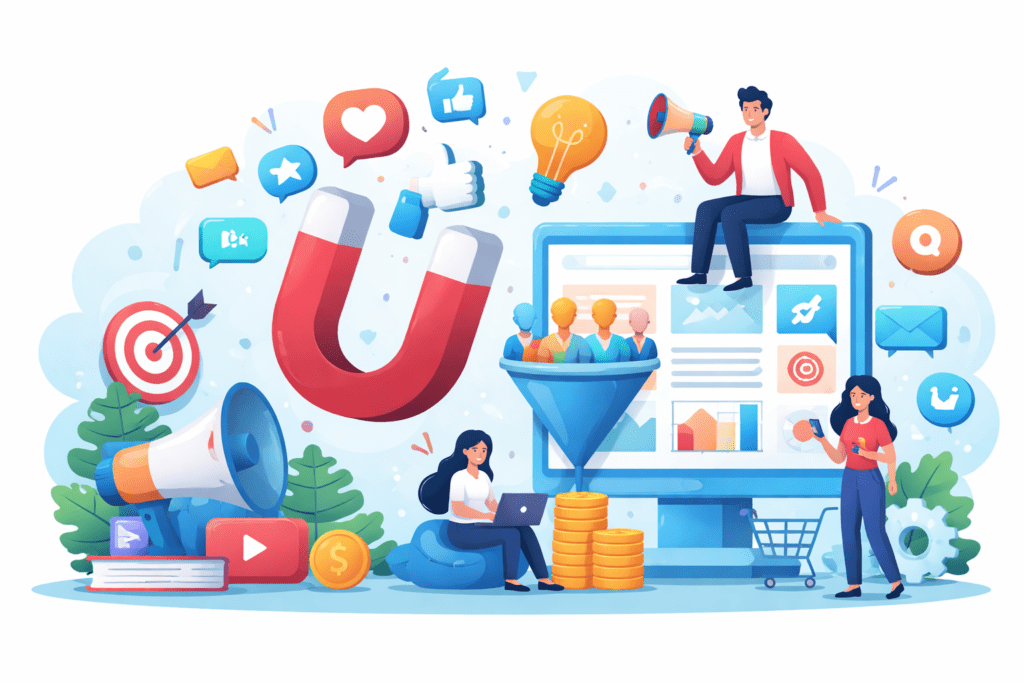
An inbound marketing funnel is a model that illustrates how strangers grow into loyal consumers through inbound marketing methods. The inbound marketing funnel has four distinct phases:
(1) Attracting
(2) Converting
(3) Closing
(4) Delighting.
The purpose of nurturing relationships with prospects at the beginning of the inbound marketing funnel is to develop visibility and awareness of a company’s brand through various forms of content (i.e., creating blog posts, search engine optimisation, utilising social media, etc.). The stage in which a business begins attracting potential customers occurs in the top section of the inbound marketing funnel.
The conversion stage occurs in the middle of the inbound marketing funnel when visitors become leads by providing their personal information in exchange for something of value (e.g., an eBook or a webinar). The closing stage involves nurturing leads through email communications, personalised content, and often through telephone conversations with sales staff. At the final phase of the inbound marketing funnel, delighting prospects keeps the customers of the business engaged and happy, which generates repeat purchase business and referrals. Businesses benefit from using a model of the inbound marketing funnel because it provides a structure to create content and strategies that support customers where they are in relation to the business, rather than applying blanket approaches across all customers.
Also Read: Core Web Vitals and SEO: A Practical Guide to Page Experience Optimization
Inbound marketing services
Inbound marketing services provide businesses with the tools needed to create and oversee their inbound marketing plans; these services typically include content development, search engine optimization (SEO), social media management, email marketing, and marketing automation. In addition to this, most agencies also offer analytical and reporting services to ensure that every part of the marketing strategy is based on data and continually adjusted for improvement.
What makes inbound marketing services different from traditional forms of marketing support is their focus on developing long-term growth opportunities for the business rather than simply seeking out immediate successes. Good inbound marketing services providers are very collaborative and work closely with all departments involved in delivering a uniform experience throughout the buyer journey. When executed correctly, inbound marketing services provide businesses with a platform to facilitate their growth in a manner that is clear, consistent, and credible.
Why inbound marketing matters today
Inbound marketing is an effective way to create strong relationships with customers because it respects both the individuals’ intelligence and their time. Inbound marketing is different from other forms of advertising because it focuses on providing value to consumers rather than just creating ads that consumers may find entertaining or memorable.
The ability to measure results is another key aspect of why inbound marketing is important. Inbound marketers can closely track each visit to a website (click), download of content (download), or interaction with content (interaction) and use these metrics to improve their marketing strategy. In this way, inbound marketing becomes increasingly effective over time, leading to reduced costs per customer acquisition, higher trust and authority in a competitive landscape, and greater success.
Getting started with inbound marketing
You don’t need to spend a ton of money or have a complicated tech stack to get started with inbound marketing; you just need to know exactly who you’re trying to reach and what pain points/thought processes are associated with those individuals while they’re online. Once you have a clear picture of this, the foundation of your entire inbound strategy will be built upon consistently creating high-quality content.
Additionally, inbound marketing is not a “get rich quick” scheme, but rather a long-term investment in building relationships with your ideal customers online. Businesses that approach their inbound marketing services with realistic expectations and focus on developing their skill set will likely see a larger return on investment over time than companies that focus on short-term ROI as the primary measure of success. The most effective way to accomplish inbound marketing is to take advantage of the expertise of an inbound marketing agency (if your company does not have internal capabilities), be consistent, empathize with your target audience, and genuinely want to help them.
Conclusion
Inbound marketing isn’t simply a strategy you employ at your business; it is a way to look at marketing. Marketers who know what the meaning of inbound marketing is, and have seen real-world inbound marketing examples of success, structure all of their outbound marketing and sales activities using the concepts of an inbound marketing funnel. Businesses that invest in the right kinds of inbound marketing services create long-term relationships with their audiences because of their earned attention. Ultimately, inbound marketing allows for the most effective and authentic method for growing your business in an environment where attention is not something that can be forced or bought; it can only be earned.

Pradeep Jade is a seasoned digital marketing consultant with over 20 years of experience across the market. He has helped businesses unlock sustainable growth in an ever-changing digital sphere. He is known for blending strategic insight with cutting-edge tools and technologies. He uses his vast experience to design result-driven marketing solutions that accelerate brand visibility, lead generation, and revenue growth. Book a free consultation with him to explore how you can take your business from 2X to 10X.